Best Custom Mechanical Keyboard Kits in 2026
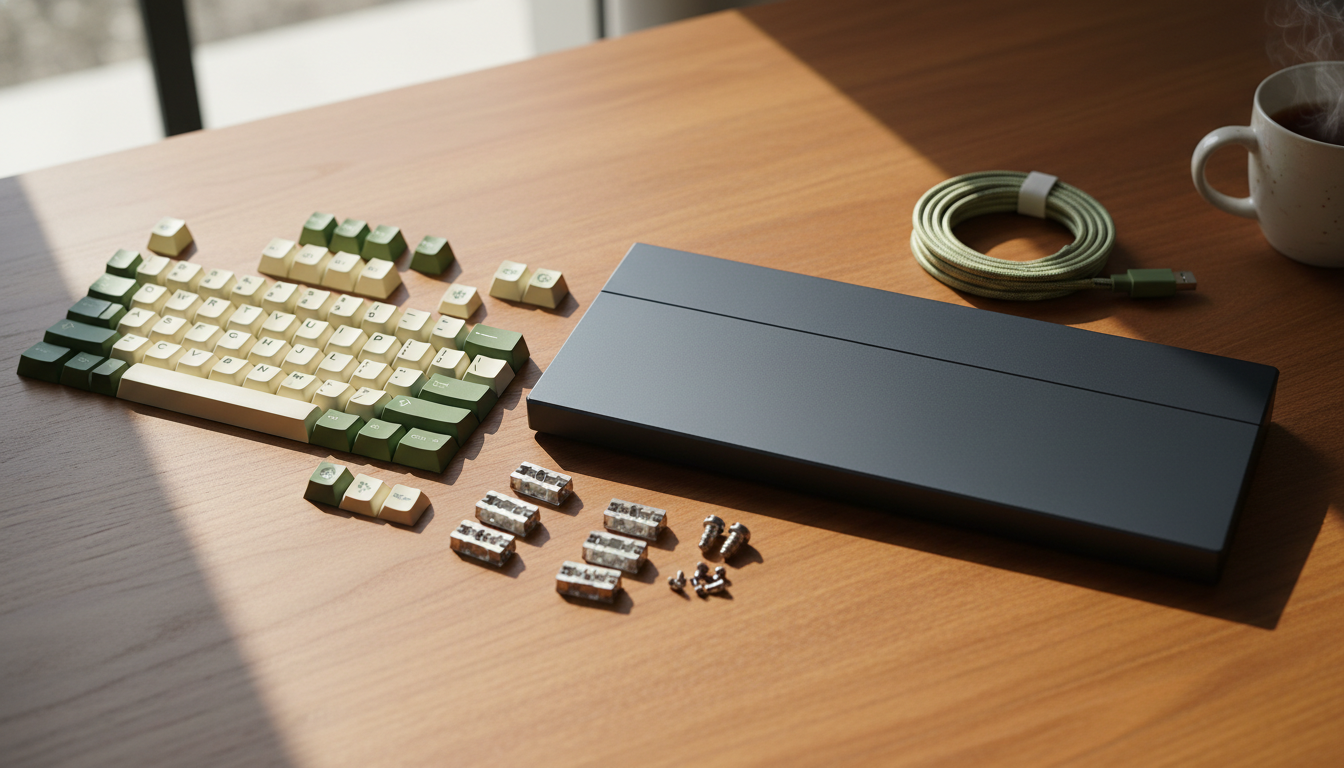
The right kit depends on whether you want a weekend project or a serious endgame board. This covers the strongest options across budgets—from accessible entry points under $100 to premium aluminum builds that will outlast every trend.
What Makes a Kit Worth Buying
A good kit ships with a solid PCB, a case that doesn’t flex or ping, and enough documentation to build without guesswork. Hotswap PCBs are worth prioritizing for most builders—they let you swap switches without a soldering iron, which matters when your taste changes six months in.
Gasket mounting has become the standard worth caring about. It decouples the PCB-plate assembly from the case walls, giving the board a softer, more cushioned sound profile. Tray-mount boards at this point are mostly a budget compromise.
Best Entry-Level Kit: Keychron Q Series
The Keychron Q1 Pro and Q2 Pro sit around $150–$200 and punch well above that price. Full aluminum cases, gasket mounting, QMK/Via compatibility, and hotswap PCBs out of the box. Keychron also ships them pre-assembled if you only want to add switches and keycaps.
The Q series doesn’t have the cachet of a group buy board, but it ships in days rather than months. For a first build, that matters more than prestige. Sound is solid—not reference-tier, but better than anything in polycarbonate at the same price.
Best Mid-Range Kit: Mode Envoy or KBDfans KBD67 Lite R4
The Mode Envoy (~$200–$250) is clean American design with flexible mounting options and a PCB that sounds good stock. Mode ships with reliable customer support and decent build documentation—rare in the hobby.
The KBDfans KBD67 Lite R4 (~$90–$120) takes the opposite route: polycarbonate case, FR4 plate, bouncy gasket feel that a lot of typists actively prefer. It’s one of the best-sounding boards at its price when built carefully. The tradeoff is a less premium feel in hand.
Decision split:
- Want a desk piece that looks expensive: Envoy
- Want the best acoustics per dollar: KBD67 Lite R4
Best High-End Kit: Satisfaction75 or Rama M60-A
These are group-buy boards that occasionally hit the used market (KeebsForSale, Geekhack BST threads). The Satisfaction75 has a rotary encoder, e-paper display, and a machined brass weight—it’s a statement piece with a legitimately excellent typing feel.
The Rama M60-A is a 60% with near-obsessive machining tolerances. UNIKORN or MOON colorways appear used for $400–$700 depending on condition. If you’re dropping that kind of money, expect build documentation to require research—these kits assume competence.
At this tier, the kit is the flex. Switches and caps become almost secondary to the chassis itself.
Best 65% Kit: Tofu65 or Feker IK75
The KBDfans Tofu65 (~$80–$130 depending on material) is a workhorse. Available in aluminum, polycarbonate, and acrylic. Hotswap PCB, solid layout (65% with arrow keys), and a proven platform with years of community mods documented online.
The Feker IK75 adds a knob and a slightly south-of-mid-range price. Gasket-mounted, hotswap, wireless options available. It’s a strong pick if you want 75% layout with knob functionality without spending Mode or Keychron Q prices.
Practical build tip: Foam mod the Tofu65 case bottom and add PE foam between PCB and plate—total cost under $5, audible difference is significant.
Beginner Mistakes to Avoid
Skipping PCB testing before assembly. Plug in the PCB, open VIA, and test every switch socket with metal tweezers before installing anything. Fixing a dead socket after the switches are in is a miserable experience.
Buying a soldering kit without hotswap options. Unless you already own a quality iron (Hakko FX-888D or equivalent), start with hotswap. Desoldering is tedious and risky on a PCB you paid $100+ for.
Underestimating stabilizer prep. Stabilizers account for roughly 40% of how a board sounds. Holee mod the stab stems, lubricate the wire with dielectric grease, and lube the housing with Krytox 205g0. Stock stabilizers on any kit, including expensive ones, are almost always subpar.
- Holee mod: Band-aid on the PCB stab mount
- Wire lube: Dielectric grease (Permatex or similar)
- Housing lube: Krytox 205g0 or Christo-Lube MCG 112
Layout First, Then Everything Else
Before comparing kits, lock in your layout preference. A 65% with arrow keys and no function row works for most people. A 40% requires remapping muscle memory. A full 100% is hard to find in a quality kit because the market moved away from it.
If you’re unsure, 65% is the practical default. It keeps navigation keys, drops the numpad bulk, and fits kits at every price point.
Bottom line: The Keychron Q series is the easiest recommendation for most builders—reliable, available, and genuinely well-made. Step up to KBDfans or Mode for more customization depth, or hunt the used market for a Rama or Satisfaction75 if you want something that holds resale value. Don’t buy a kit without confirming hotswap support unless you own a good iron and know how to use it.