Plastic vs Metal Keyboard Cases: Which Should You Buy?
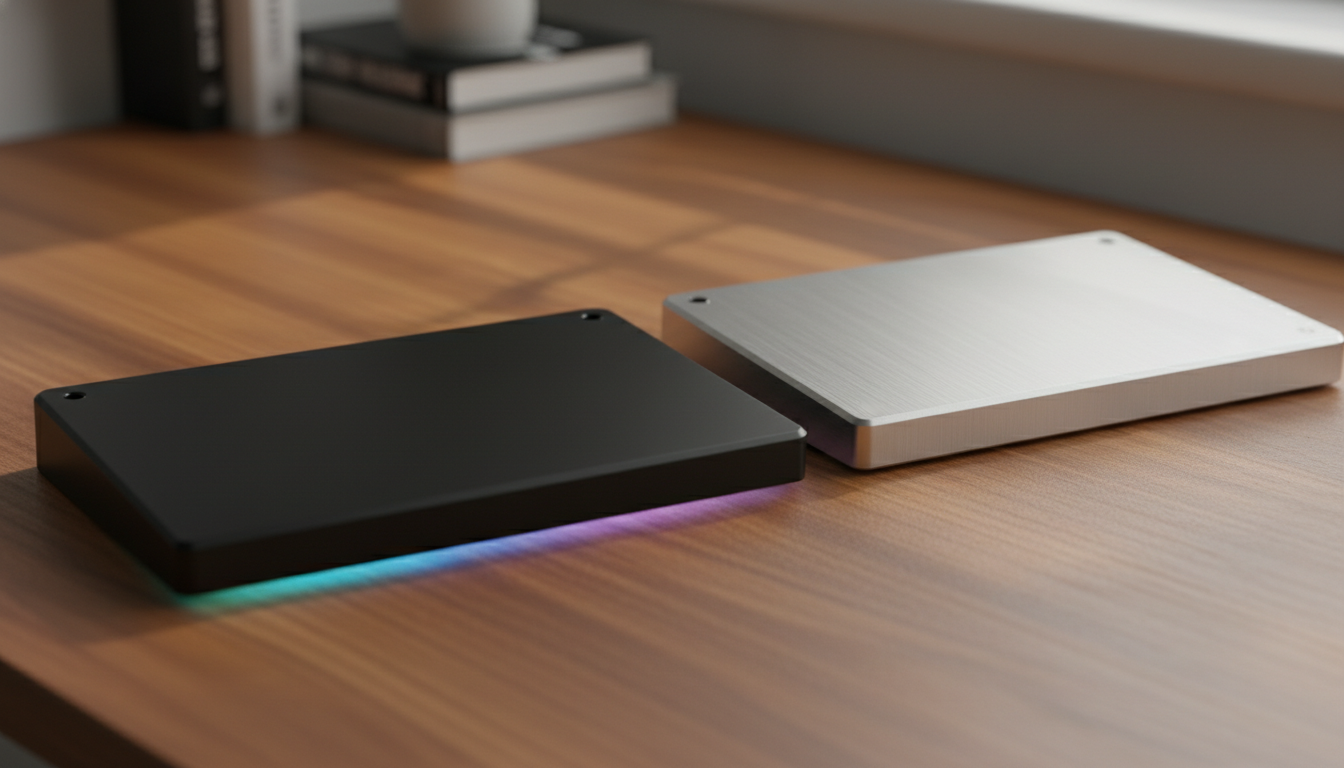
The case material shapes everything about how a keyboard feels and sounds—not just how it looks on a desk. Aluminum gets most of the hype, but polycarbonate and ABS plastic are legitimate choices depending on your switch preferences, budget, and typing style.
Short answer: metal for a dense, clacky build with premium feel; plastic for a bouncier, softer typing experience or a tighter budget.
What Case Material Actually Changes
The case determines how vibration travels through the board. A rigid aluminum case reflects sound upward, producing louder, more defined acoustics—often described as “clacky” or “solid.” A polycarbonate (PC) case flexes slightly under keystrokes, dampening some of that energy and producing a softer, lower-pitched sound profile.
It also affects weight. A typical 65% aluminum case runs 800g–1.2kg bare. A comparable PC or ABS case sits closer to 300–500g. That weight difference changes how the board sits on your desk and whether it moves during heavy typing sessions.
Aluminum Cases: Strengths and Trade-offs
Aluminum is the default premium choice for a reason. Boards like the Tofu65 (KBDfans) or Satisfaction75 use 6063 or 7075 aluminum with tight tolerances—the result is a board that feels machined and intentional. The rigidity produces sharp acoustics that pair well with tactile or clicky switches like Boba U4Ts or Zealios.
The downsides are real though. Aluminum transmits ping easily. A bare aluminum case without case foam, PCB foam, or PE foam will almost certainly ping on harder switches. You’ll spend extra time and money dampening the build to get it sounding right. Budget aluminum boards (sub-$80) often have thinner walls that ring more than a well-machined $150+ case.
Aluminum also runs cold to the touch, which some typists dislike. And if you drop it on a hard floor, edges dent.
Polycarbonate Cases: Underrated for Specific Builds
PC cases have a legitimate fan base in the custom keyboard community, and it’s not just about cost. The flex in a polycarbonate case softens the bottom-out feel on each keystroke, which reduces finger fatigue over long sessions. Paired with linear switches—especially something smooth like Gateron Oil Kings or Jerrzi Magnetic Jades—a PC case produces a deep, muted thock that aluminum simply can’t replicate without heavy dampening.
The Bakeneko65 (Cannon Keys) ships in a PC option that demonstrates this well. It’s not trying to be a budget aluminum board—it’s chasing a specific sound signature that PC enables.
Transparency is a bonus for RGB builds. PC is optically clear, so lighting diffuses through the case itself rather than only through the switches and legends.
ABS Plastic: Budget Territory, Honest Limitations
ABS plastic (used in boards like the Keychron C-series or Akko boards under $80) is a different category from PC. It’s less rigid than aluminum and less acoustically interesting than PC. ABS tends to produce a hollow, rattly sound on cheaper boards because the case walls are thin and the tolerances are looser.
That said, ABS boards are where most people start, and they’re fine for that. A Keychron C3 Pro at $35 gives you a functional board to learn on. Modding it with tape mod and switch films can improve the sound noticeably.
ABS becomes a liability when you’re spending $150+ on switches and a premium keycap set. At that spend level, the case becomes the limiting factor in your overall build quality.
Sound Profile: The Practical Summary
- Aluminum + tactile/clicky switches: high-pitched, defined, “thocky” with dampening mods
- Aluminum + linears: risks being pingy without foam; rewards good dampening work
- Polycarbonate + linears: naturally deep and soft; easiest path to a “thocky” build
- Polycarbonate + tactiles: softer feedback, works well but loses some tactile sharpness
- ABS + any switch: serviceable; more dependent on PCB and switch quality than the case
Weight and Portability
If the keyboard travels—commuting, LAN parties, a second desk—aluminum’s weight is a real drawback. A 1kg board in a bag gets heavy fast. PC and ABS boards are much easier to carry.
For a desk that never moves, weight is an asset. Heavy boards stay put and feel more substantial under fast typing.
Which One Should You Buy
Choose aluminum if you want a flagship build with defined acoustics, plan to do dampening mods, and are spending $100+ on the case alone. The KBDfans Tofu Redux, Mode Sonnet, or Gmmk Pro (aluminum version) are solid starting points.
Choose polycarbonate if you want a naturally soft, deep sound without heavy modding, or if you prefer linears and want flex in the build. The Bakeneko65 or a Lilac from Cannon Keys are purpose-built for this.
Choose ABS if you’re under $80 total and just want a working mechanical keyboard. Upgrade the case later when the hobby sticks.
Bottom line: Aluminum isn’t inherently better—it’s louder and more rigid, which is a feature or a flaw depending on your target sound. Polycarbonate is the underdog choice that consistently outperforms its price point when paired with the right switches.